
By Trevor Morgan, Owner · Last updated September 2026.
Science camp brochures all promise the same thing — fun, learning, STEM! — which is exactly why picking one is hard. I run science camps for a living, and I’ll tell you the honest secret of our industry. The difference between a great science camp and a glorified daycare is invisible in the brochure and obvious in about four questions. This is the checklist I’d use as a parent, including the questions I’d put to any camp — ours included.
Key Takeaways
- The single biggest differentiator is the ratio of doing to watching — ask what a camper does hour by hour, and how many experiments each child runs personally.
- Match the theme to your kid’s existing obsession, not to the most impressive-sounding week.
- “Ages 5–16” can mean age-scaled programs or one-size-fits-none — ask how the same theme adapts across ages.
- Verify the people: background checks on instructors, a scientist behind the curriculum.
- You don’t have to bet a full week to find out — one reserved Open Lab hour is the cheapest camp test-drive there is.
What a Science Camp Checklist Covers
A science camp is a multi-day, themed program where kids spend their school break doing experiments. Summer is the classic season, but spring break and holiday camps solve the same childcare-plus-enrichment problem at other times of year. The checklist below covers the eight things that actually separate camps: daily structure, theme fit, age handling, schedule realism, and staff quality. It also covers equipment, season coverage, and a low-risk way to try before you commit.
Why be this picky? Because the format genuinely matters. The largest analysis of learning-by-doing ever conducted found students taught by lecture were about 1.5 times more likely to fail than students who learned actively. A camp week is the same fork in the road: five days of watching, or five days of doing.
1. Ask What the Kids Do, Hour by Hour
Some programs are mostly presentations with one activity at the end; the good ones can tell you specifically what a camper does each day. Ask three questions:
- How many experiments per day?
- How many are hands-on for every child (not one per table)?
- What does Tuesday at 10 a.m. actually look like?
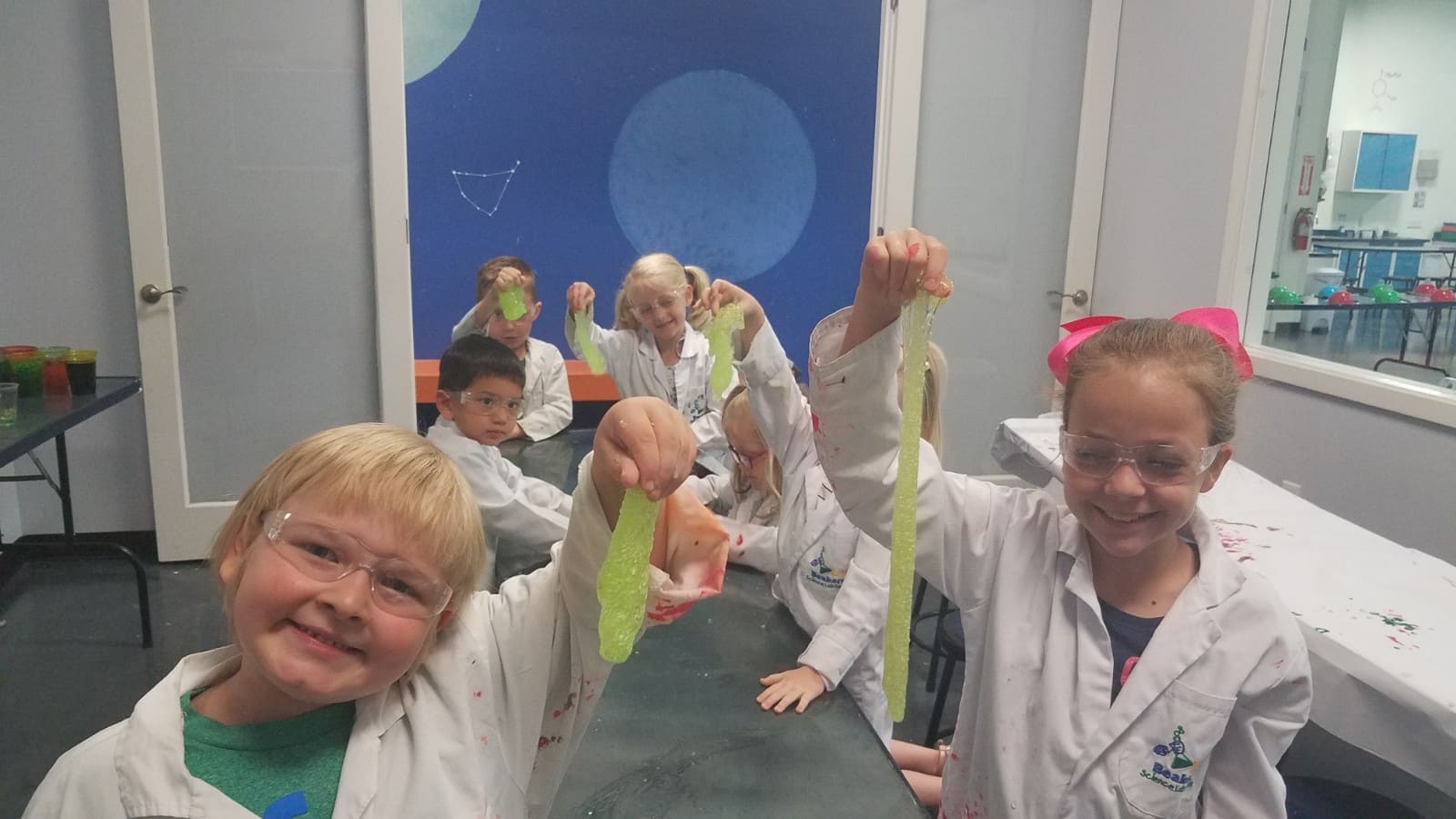
At our camps, kids run real experiments every single day — about seven activities and experiments per camp day. If a camp can’t answer at that level of detail, that’s your answer.
2. Match the Theme to Your Kid, Not the Brochure
Themed weeks are where camps earn their keep — chemistry one week, rockets another, forensics another. We run 19 different camp themes, and the honest advice is: pick the one your kid already talks about. The dinosaur kid should get the dinosaur week. Obsession is the best teacher, and the research on hands-on motivation backs the instinct — engagement drives the learning, not the other way around.
3. Check How the Age Range Is Handled
“Ages 5–16” on a website can mean two very different things: thoughtful age-grouping, or a 6-year-old and a 14-year-old doing the same worksheet. Ask how the camp adapts one theme across ages. The experiments should scale — same science, different depth. Ours do — it’s the same scaling we run every day in Open Lab, where a station has to work for a 4-year-old and stump a teenager.
4. Half-Day or Full-Day? Be Realistic
Morning sessions — ours run 9:30 a.m. to 12:30 p.m. in Texas (Utah mornings run about 9 to noon) — are the sweet spot for younger kids: real engagement, no afternoon meltdown. Older kids go longer happily. Pick the schedule that matches your child’s stamina, not your ideal calendar, and confirm the camp offers both.
A first-day note for first-timer parents: day-one jitters are normal and short-lived. The station format absorbs a hesitant kid within the first experiment, because there’s a job for their hands before there’s any social pressure to manage. If your child runs anxious, book with a friend and pick the morning session — by Tuesday the drop-off is a sprint away from you.
5. Ask Who’s Running It
You’re handing over your kid for a week. You’re allowed to ask:
- Are instructors background-checked? (Every Little Beakers instructor is.)
- Who designed the curriculum — and is a scientist involved? (Ours comes from our founder, a military and aerospace polymers chemist.)
- What’s the instructor-to-camper setup at the bench?
Any camp worth booking answers these without flinching.
6. Look for Real Equipment
If the packing list says “closed-toe shoes” and the photos show safety glasses and labware — good sign. Kids know the difference between a real lab and a craft table, and the pride of using real equipment is half of what they bring home. Our founder makes the full case in Hands-On Science for Kids: The Complete Guide; the camp-week version is simple: five days with real tools beats five days with popsicle sticks.
7. Check the Seasons, Not Just Summer
Summer gets the attention, but spring break and the winter holidays are when parents scramble hardest. A camp that runs year-round school-break programs solves the same problem three times a year — ours run summer, spring break, and holiday sessions for kids ages 3–16 in Texas and 5–16 in Utah.
8. Try Before You Commit a Week
The trick most parents don’t know: you don’t have to bet a whole week to find out if your kid likes the lab. One Open Lab visit — an hour, self-guided, 30+ experiments at 6 different lab stations — is the cheapest camp test-drive there is. If they don’t want to leave, book with confidence.
The Questions to Ask Your Kid (Before You Ask Any Camp)
Half of camp-picking is vetting the camp; the other half is knowing your own camper. Five questions worth asking at dinner before you book anything:
- “If you could spend a whole week on one thing, what would it be?” The answer is your theme shortlist. Don’t lead the witness — “rockets” and “slime” are both correct answers.
- “Do you want to know anyone there, or is new-kids fine?” Some kids thrive as the new scientist; some do better booking with a friend. Neither is wrong, and knowing which you have changes how you book.
- “Morning kid or afternoon kid?” They know. Trust them over the schedule that’s convenient for carpool, if you possibly can.
- “Watching or doing?” Show them a video of a science demonstration and ask if they’d rather watch that or do it themselves. If your child genuinely prefers watching, a heavy hands-on camp may need a gentler on-ramp — that’s exactly what an Open Lab hour is for.
- “What would make it the best week ever?” Kids will tell you the metric they’re grading on. Sometimes it’s the science; sometimes it’s lunch. Both are actionable intelligence.
Ten minutes of this conversation prevents the most expensive camp mistake there is: a great camp that’s great for a different kid.
Red Flags: When to Keep Looking
The checklist tells you what to seek; here’s what should send you politely back to the search results:
- Vague daily schedules. “A mix of fun activities and learning!” is not a schedule. If they can’t tell you what Tuesday looks like, Tuesday hasn’t been planned.
- Demonstration-heavy programming. If the photos show rows of kids watching one adult make something fizz, you’re paying camp prices for assembly programming.
- One program for all ages. A camp that runs 5-year-olds and 14-year-olds through identical activities is boring half the room at any given moment. Ask which half yours will be in.
- Evasiveness about staff screening. “All our staff love kids!” is not a background check. The correct answer to “are instructors background-checked?” is one word.
- No cancellation or make-up policy in writing. Summer happens — fevers, family plans. Know the policy before you pay, not after.
- Craft supplies posing as science. Popsicle sticks and googly eyes have their place. That place costs less than a science camp.
None of these makes a camp evil — they make it a different product than the one you’re shopping for.
What a Camper Actually Brings Home
Parents ask what the deliverable is. Here’s the honest inventory after a week at ours.
Physical: a week of made-things — polymers, builds, launched rockets, forensic case notes — most of which survive the ride home.
Verbal: a noticeably upgraded dinner-table vocabulary. When a seven-year-old uses “reaction” correctly and unprompted, that’s the curriculum showing.
Behavioral (the one that matters): the “what happens if” habit. Campers come home and start proposing experiments — on the garden hose, on ice cubes, on the dog’s fetch trajectory. This is wonderful and occasionally messy. We consider it a feature and accept no liability for kitchen-based research programs.
Social: a bench partner or two. Kids bond fast over a shared rocket launch. A camp with returning kids each season is a camp building a small community, and it’s worth asking any camp what their return rate looks like.
The Budget Conversation, Handled Honestly
Camp pricing varies too much by market and season for me to quote numbers usefully in an evergreen guide — but here’s how to compare quotes fairly:
- Divide by contact hours, not by days. A “week” can mean 15 hours or 40. Price per hour is the real comparison.
- Ask what’s consumed. A camp where every kid runs every experiment burns real materials — that’s part of what you’re buying. A camp with one demo per day has very different costs, and the price should reflect it.
- Count the take-home. Materials that go home with your kid (see inventory above) are value delivered; factor them in.
- Watch for sibling and multi-week rates. Most camps, ours included, would rather fill benches than hold sticker price — ask.
And the cheapest insurance in the whole process remains the test-drive: one Open Lab hour before you commit a week tells you more than any brochure.
Science Camps Around Houston and Salt Lake City
If you’re local to us, the checklist has a shortcut: come see the lab. We run camps at all five locations — Cypress, The Woodlands, and Katy/Memorial in the Houston area, Sandy and Orem in Utah. All of it happens in permanent lab facilities, not borrowed classrooms. Popular weeks and morning sessions fill first, especially in summer.
What a Good Camp Week Actually Buys You
The stakes are bigger than one week of childcare. Out-of-classroom experiences leave marks that show up months later. In one large randomized study of school visits to a cultural institution, students showed measurably stronger critical thinking and remembered specifics weeks afterward. The biggest gains went to kids with the fewest other opportunities. A camp week is that effect, times five days, pointed at science. The kid who launches a rocket they built on Wednesday still believes “I can do science” in October — and that belief is the thing worth shopping carefully for.
What to Do Next
- Run the eight questions against any camp you’re considering — including ours.
- Shortlist by your kid’s obsession, then check age-grouping and session times.
- If you’re near a location, do the Open Lab test-drive first.
- Book early: see themes and dates or call 1-833-KIDS-LAB (1-833-543-7522) with your break dates.
Keep Reading: The Little Beakers Guide Series
- Hands-On Science for Kids: The Complete Guide — the master guide.
- Open Lab Explained — the one-hour test drive.
- Science Birthday Party Ideas — for when the camp kid has a birthday coming.
- Hands-On Homeschool Science — the school-year version of a lab habit.
Science Camp FAQs
What ages are science camps for?
Ours serve kids ages 3–16 in Texas and 5–16 in Utah, grouped and adapted by age; most quality camps set a similar floor around kindergarten age.
What does a typical science camp day look like?
At Little Beakers: a themed session packed with hands-on work — about seven activities and experiments per day, every day of the week.
My kid has never done a science program — will they keep up?
Yes. There’s no prerequisite; camps are built for first-timers and returners alike, and instructors guide every experiment.
When should I register for summer science camp?
As soon as you know your dates. Popular themes and morning sessions fill first — and don’t forget spring break and holiday weeks exist too.
Half-day or full-day science camp — which is better?
For younger kids, half-day mornings win almost every time. Save full days for older kids with the stamina to enjoy them.
About Little Beakers
Little Beakers is a hands-on science lab for kids ages 2–16, founded by chemist Dr. Cinttya Morgan. Five permanent lab locations: Cypress, The Woodlands, and Katy/Memorial in Texas; Sandy and Orem in Utah. Camps, classes, parties, field trips, and Open Lab — all built on one rule: the kids do the science.
Compare us against the checklist: science camps at Little Beakers · 1-833-KIDS-LAB (1-833-543-7522).
About the author: Trevor Morgan is the owner of Little Beakers and has watched more camp weeks than anyone should admit. He still recommends the morning sessions.